5 things that are nice to have on your campsite website
If you’ve already covered off the “10 things you need on your campsite website” and you're looking to make further improvements, you’re in the right place.
In the first blog post, we covered the essentials that people are looking for when booking a campsite. Now, we’re moving on to the content that will help them hit the “book now” button.
5 things that are NICE to have on your campsite website:
1. “About”
You’ll have told people about your campsite in various places on your website, but this is where you can share more of your story and background, and explain what makes you different. It’s not going to be the most visited page on your website, but it is a good opportunity to explain what’s important to you, and uniquely your own. And increasingly people are making decisions to support businesses that align with their own values.
This is where people might learn about:
Your history and background particularly if you’ve been family owned for years or a working farm for example
The things you care about such as sustainability, local produce, nature
Your team - the friendly faces people might encounter during their stay
Fforest Ffields in Radnorshire have a great example on their website explaining the history of the land they’re on.
Mother Ivey’s Bay Holiday Park in Cornwall talk about the work they do in the local community, and the other organisations and charities that they work with and support including Cornwall Wildlife Trust, Wadebridge Foodbank, Padstow Lifeboat Crow and Beach Guardian.
And it doesn’t even need to be a whole page. This little example is from the homepage of The Ranch in Honeybourne. A unique little story that highlights their farming background, family-owned history and helpful nature.
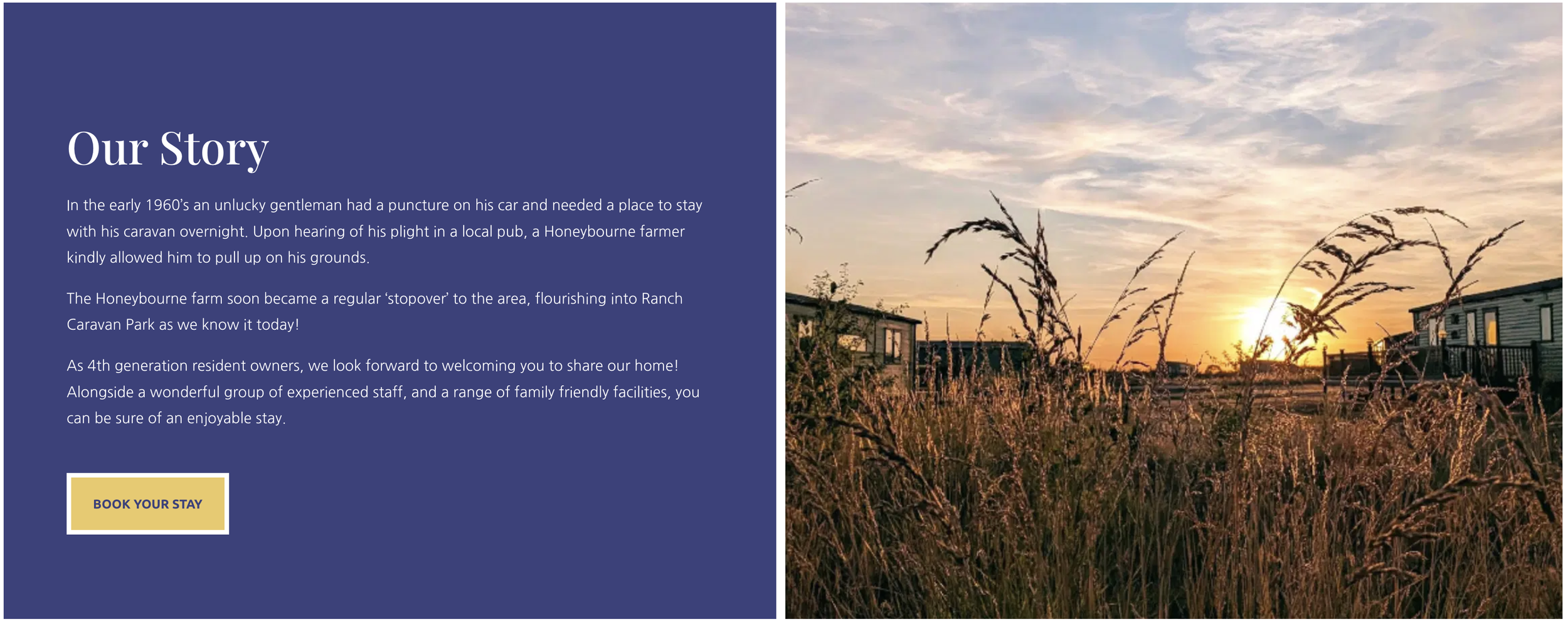
The Ranch - our story
2. Reviews
If your campsite is receiving great reviews, don’t be embarrassed to share them! Social proof and recommendations will help build confidence in people’s decisions to stay with you. And if you’re working hard to deliver good service, you should share the positive comments you receive.
The two examples below are embed from other services - Campstead, TripAdvisor and Google. You can also include Facebook reviews. And if you haven’t got the positive reviews to share, encourage your guests to leave a review after their stay. It’s useful feedback for you and will help future bookers make their decision.
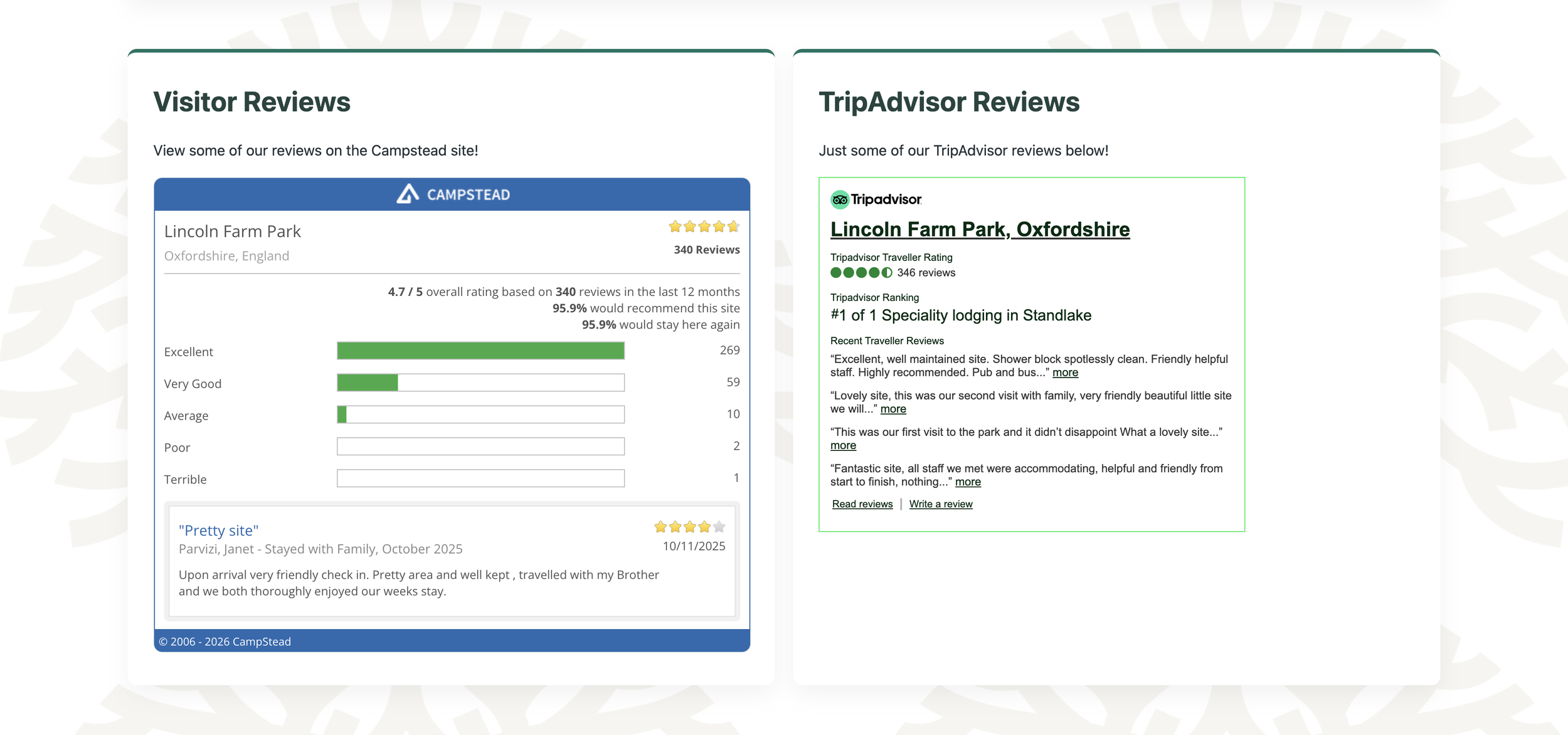
Lincoln Farm Park - Facebook and TripAdvisor reviews
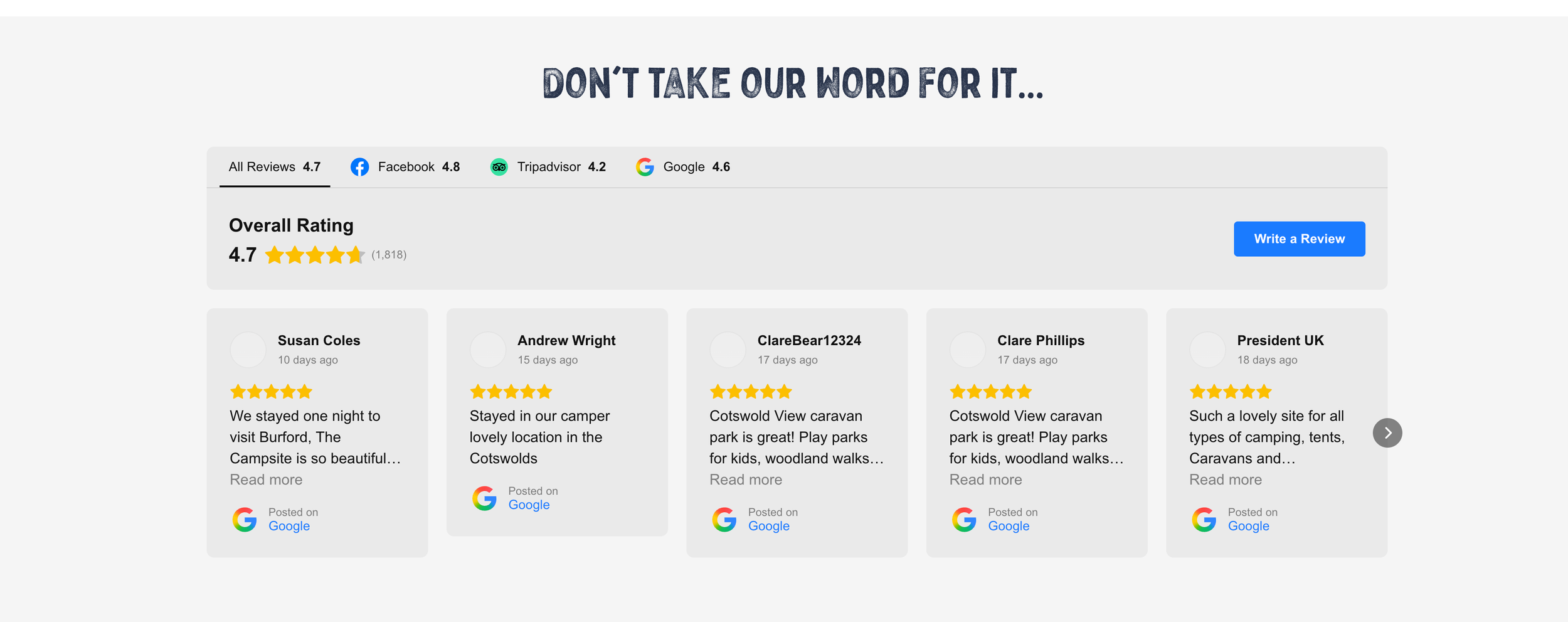
Cotswold View - Google reviews
3. Things to do in the local area
Your location could be a real draw for people looking to stay on your campsite, particularly if they’re visiting for a slightly longer break with plenty of time to explore the area.
Cotswold View is located in Charlbury - a village that might not be familiar to many, but this visual and content on their website highlights the nearby attractions and tourist destinations that you can explore in the region and even includes the distance from the campsite. Nicely done.
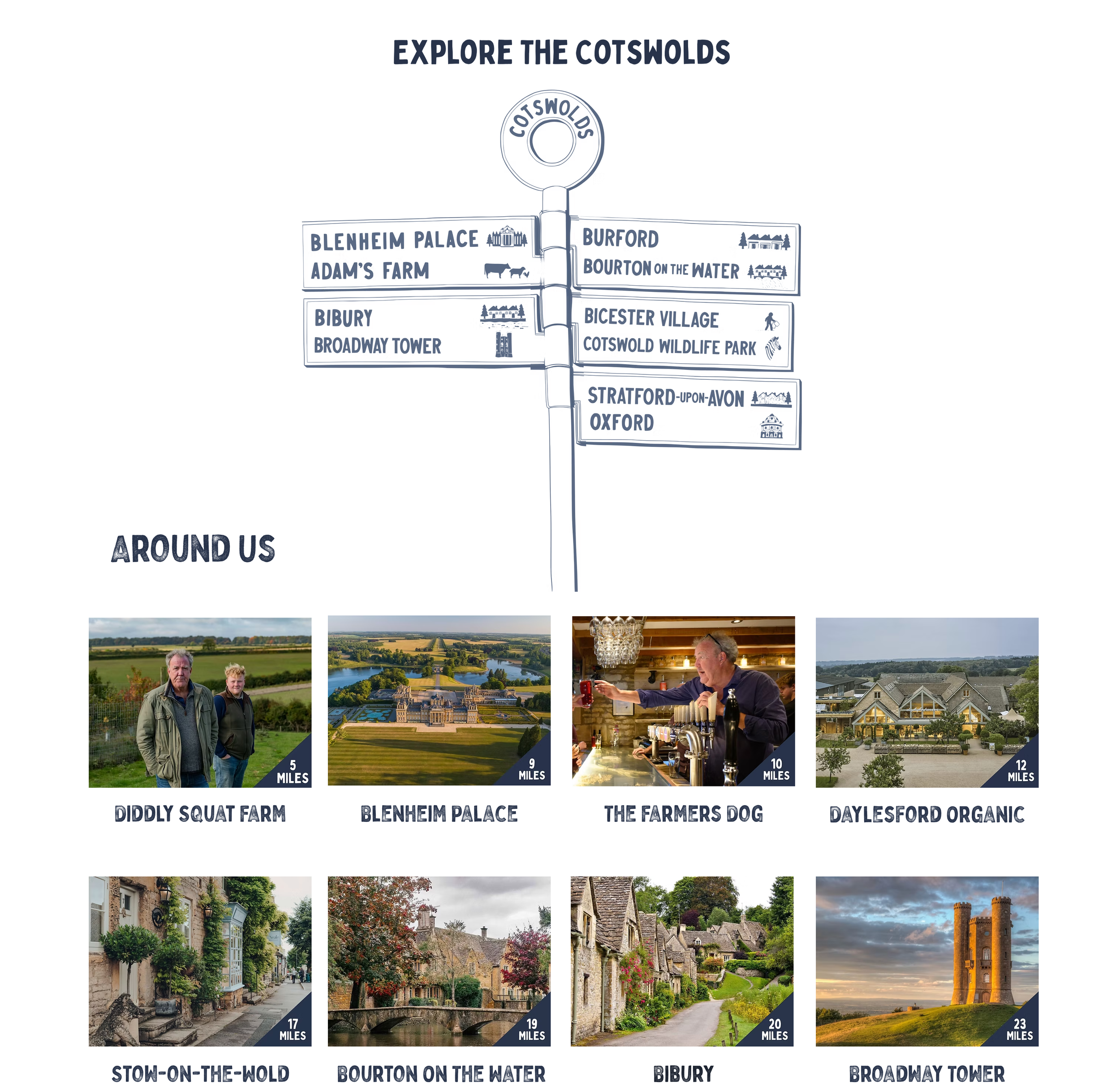
Cotswold View - explore the Cotswolds
4. Social media feed or links
Many campsites have guests that return again and again, year after year. They may have even been visiting your campsite for 20-30 years (or even longer!). Your campsite isn’t just a holiday to them - it’s about the memories, the nostalgia, the connection that it brings them.
Giving them a way to keep in touch with you throughout the years, and evoke those memories will help keep you front of mind, and prompt future visits. It’s also a great way to show off your site and facilities - sunset views, open fields, families having fun. Social media can also provide a quick and easy way to let people know about any visiting food vans, local events or special discounts you have on.
Sharing images on Facebook and Instagram in particular can give a great nudge for people to book their next stay with you.
5. Awards, affiliations or memberships
Like reviews, awards and memberships are another way of building social proof and credibility. Nantcol Waterfalls won “best campsite” awards from campsites.co.uk in 2024 and 2025 and have included them prominently on their homepage.
Tudor Park in Slimbridge also have many accolades and awards and even have a webpage on their site dedicated to awards. However, if you’re going to include them, it’s best to make sure they’re from the past few years if possible. Highlighting awards from as far back as 2014 and 2015 might make people wonder how often you’re updating your website, and whether the information is out of date!
So, you’ve got the 10 things you need on your campsite website, and now the 5 things that are nice to have! Next, check out the 5 things to avoid!
And if you need a bit of help working out what this looks like on your campsite website, I’m happy to chat. Book a call with me to discuss your challenges and to see how I can help.
